Ehrenberg
Ehrenberg Was Closer Than We Think
In 1839, Christian Gottfried Ehrenberg considered the minute calcareous bodies that we now call coccoliths to have been derived from the breakdown of microscopic organisms.
„…sondern ist Folge des Zerfallens angehäufter mikroskopischer Organismen in anorganische weit kleinere Kalktheile und deren Wiedervereinigung in regelmäßige, elliptische, gekörnte Blättchen durch einen eigenthümlichen von der Crystallisation von Grund aus verschiedenen, gröberen, aber mit ihr vergleichbaren Process der Crystalloidbildung.“
“...it results from the breakdown of accumulated microscopic organisms into inorganic, much smaller calcareous particles and their subsequent reunification into regular, elliptical, granular platelets through a peculiar process of crystalloid formation, fundamentally different from crystallisation, coarser, but comparable with it.”
I wish he had put a full stop after “microscopic organisms.”
Up to that point, he was remarkably close to recognising the biological origin of these minute calcareous bodies. His interpretation went astray when he proposed that the organic material broke down into much smaller inorganic calcareous particles, which then reassembled to form the regular elliptical platelets.
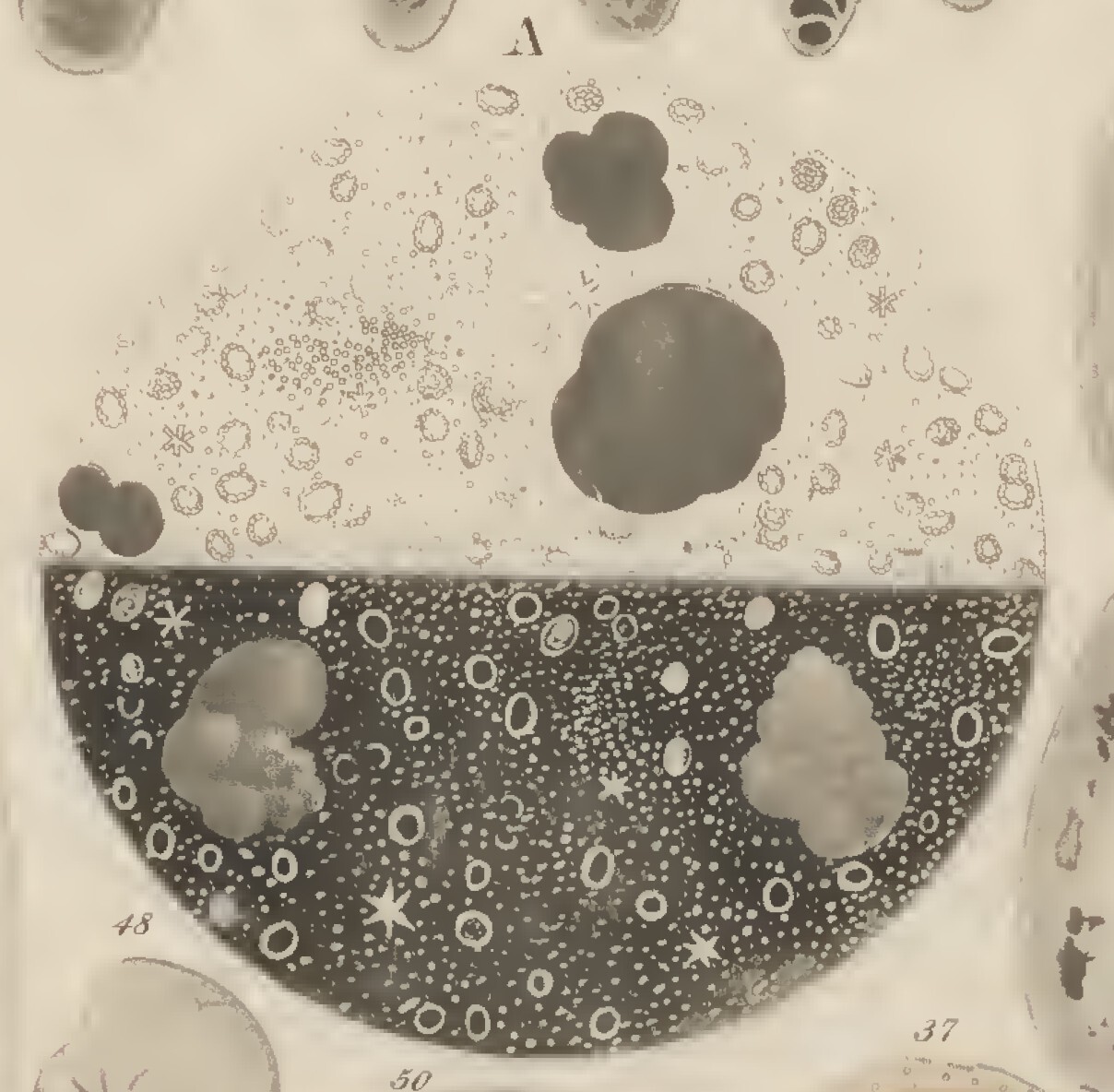
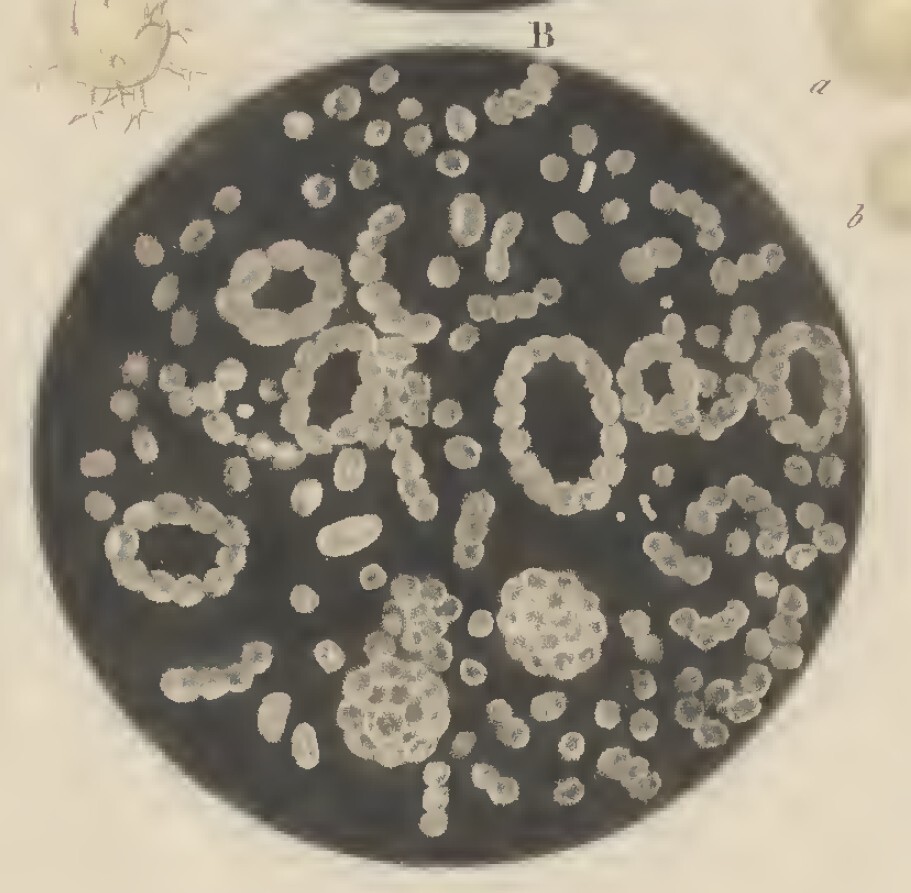
Even more intriguingly, Ehrenberg later illustrated what we can now recognise as a coccosphere. By then, the evidence was in front of him: individual coccoliths and their association in a larger spherical structure.
But he did not make the connection in the way we understand it today. Instead, he attempted to explain the formation of these elements through an inorganic process of disintegration and subsequent reassembly.
Ehrenberg also recognised Discoaster as organic, although he interpreted Discoaster stella (Dictyocha? stella) as siliceous rather than calcareous.
Nearly two centuries later, it is easy for us to recognise the coccosphere in his illustration. The fascinating question is not simply what Ehrenberg got wrong, but how extraordinarily close he came to getting it right.
Images: Ehrenberg, 1854, Mikrogeologie, Pl. 26A and Pl. 30B.