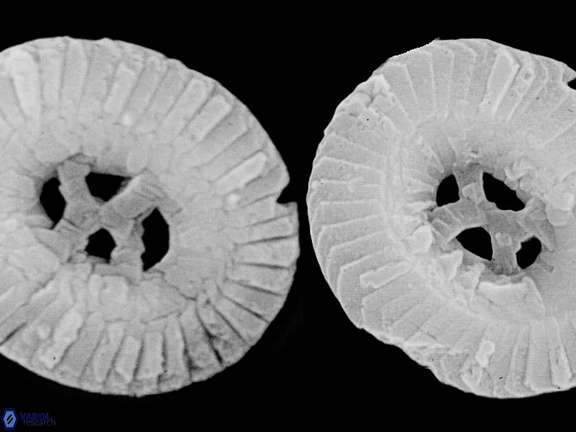
Sullivania
Taxonomy by Preference: The Unjustified Rejection of Sullivania
Nannotax Commentary on Sullivania
In other cases, proposed changes are more subjective- e.g. whether to follow a proposed subdivision of a genus into two. For older proposals we can follow general practice - e.g. Varol (1992) proposed subdividing the genus Chiasmolithus into two genera and while this has obvious logic it has not been widely followed. In other cases this is not available as a guide and so a subjective assessment is necessary. In general we will adopt a conservative approach, but attempt to document changes that have been proposed even if we do not follow them. If you disagree with our taxonomy please feel free to use the comments facility to explain why.
A Critique of Subjective Practice and Its Consequences for Taxonomic Stability
The Nannotax commentary acknowledges that some proposed taxonomic changes are inherently subjective — for instance, whether to follow a proposed subdivision of a genus into two. For older proposals, general community practice can serve as a guide. Varol (1992), for example, proposed subdividing the genus Chiasmolithus into two genera; while the logic is sound, the proposal has not been widely adopted. Where no such precedent exists, Nannotax states it will apply a "conservative approach" and document unadopted proposals — inviting disagreement via the comments facility.
The Problem: Subjectivity Is Not a Valid Taxonomic Standard
The commentary does not clearly state the grounds on which Sullivania is rejected — and this omission is significant. If the rejection rests on the fact that the name is not widely used, this directly contravenes ICN Article 51.1, which states explicitly that a legitimate name must not be rejected merely because it is less well known, less preferred, or because another name is considered more familiar or convenient.
It is also worth noting the circular nature of this reasoning: a name gains currency through use. When resources such as Nannotax decline to adopt a legitimate name, they actively suppress its uptake — and then cite its limited use as justification for continued rejection. This is self-reinforcing marginalisation, not taxonomy.
More broadly, subjectivity has no place in formal taxonomy. The International Code of Nomenclature exists precisely to remove personal preference from these decisions, ensuring stability, consistency, and reproducibility. A self-declared "subjective approach" does not merely bend the rules — it actively undermines the stability that the Code is designed to protect.
A Particularly Troubling Inconsistency: Sullivania gigas and Pletolithus
Perhaps the most striking illustration of this inconsistency concerns Sullivania gigas. This taxon — one of the defined end members of Sullivania — has been used as the basis for a new genus, Pletolithus, which Nannotax has adopted. Critically, this adoption appears to have occurred without any formal comparison with Sullivania.
This is difficult to reconcile. If Sullivania is rejected on the grounds of subjectivity or insufficient uptake, how can a genus erected from one of its own constituent species be accepted — and without even addressing the parent genus? This inconsistency does not reflect conservative practice; it reflects selective application of taxonomic judgement, and it sets a poor precedent.
Good taxonomy is not a matter of preference. It follows rules, applies them consistently, and prioritises long-term stability over short-term familiarity. The treatment of Sullivania — and the contrasting adoption of Pletolithus — falls short of that standard.