Watznaueria arata
Set number: 3193
-
1
-
2
-
3
-
4
10µm
Set number: 3196
-
1
-
2
-
3
-
4
-
5
-
6
-
7
-
8
-
9
-
10
-
11
-
12
-
13
10µm
Ellipsagelosphaera arata Black, 1973
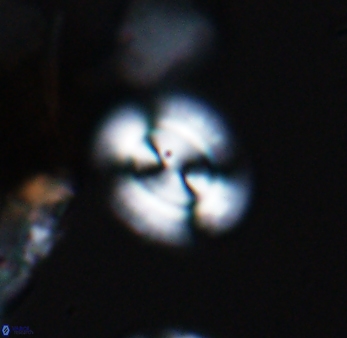
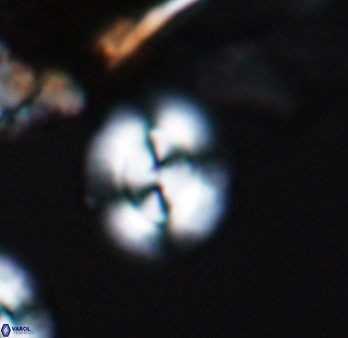
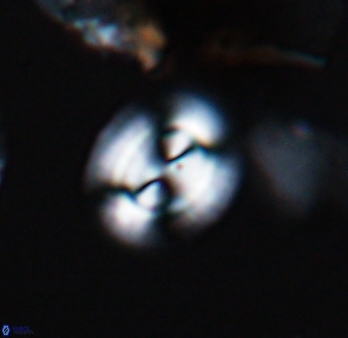
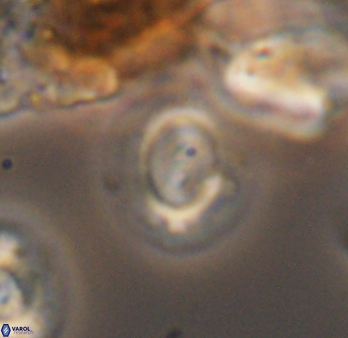
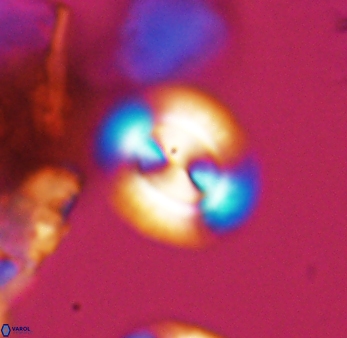
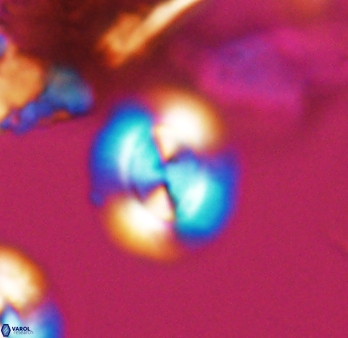
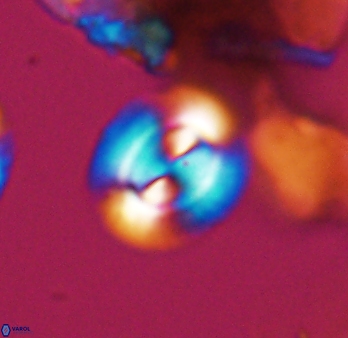
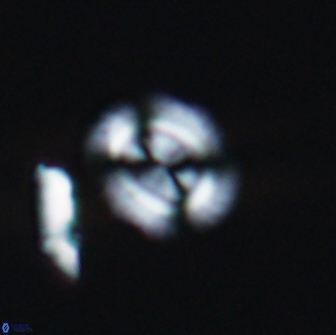
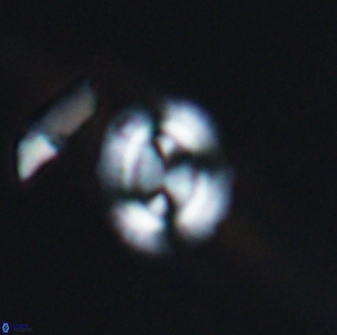
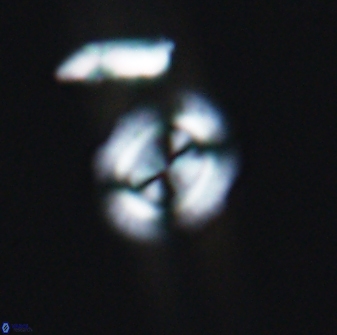
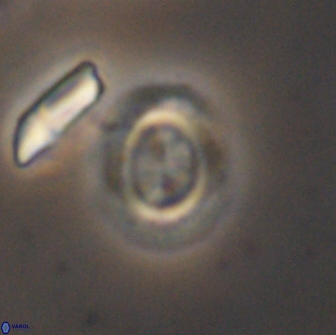
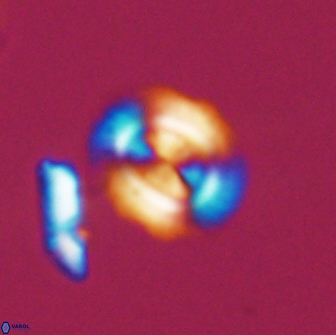
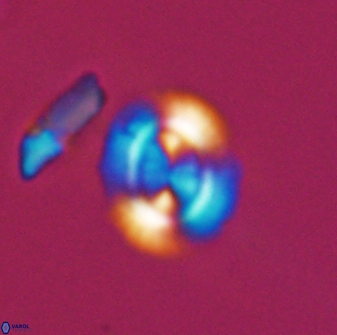
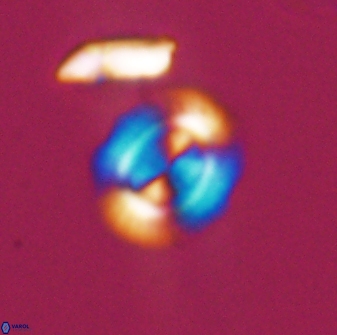
In plan view under cross-polarised light, the shields display white interference colours, inclined extinction lines, and length-fast (–) elongation. The inner tube cycles exhibit less intense, greyish-white interference colours with inclined extinction. In distal side, the extinction angles in the shields is approximately 77°. This cannot be directly measured in the tube cycles due to the oblique orientation of their constituent segments; however, the apparent angle between extinction directions in the tube cycle is approximately 73°, corresponding to an obliquity of approximately 17°. Optical properties corroborate the presence of a narrow outer tube cycle observed under phase-contrast and bright-field illumination, especially in cross-polarised light with gypsum plate illumination. The locking cycle exhibits interference colours, producing a transitional boundary between the tube cycle and shield.
Elliptical species of Watznaueria, composed of a single-tiered distal shield and a distinctly narrower single-tiered proximal shield, with a very narrow outer tube cycle and a wide, smooth inner tube cycle that completely closes the central area. The narrow outer tube cycle is readily observed under phase-contrast and bright-field illumination.
Black, M. 1973. British Lower Cretaceous Coccoliths. I-Gault Clay (Part 2). Palaeontographical Society Monograph 127: 49-112.
Holotype
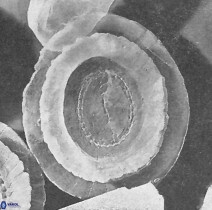
Ellipsagelosphaera arata
Black, 1973
Middle Albian
Folkestone, SE England