Watznaueria biporta
Set number: 3210
-
1
-
2
-
3
-
4
-
5
-
6
-
7
-
8
10µm
Set number: 3208
-
1
-
2
-
3
-
4
10µm
Set number: 3209
-
1
-
2
-
3
-
4
-
5
-
6
10µm
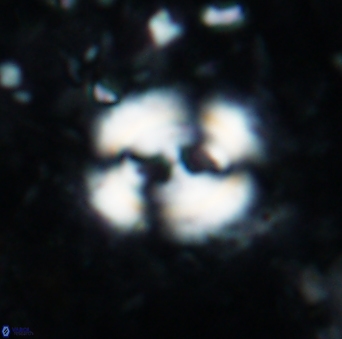
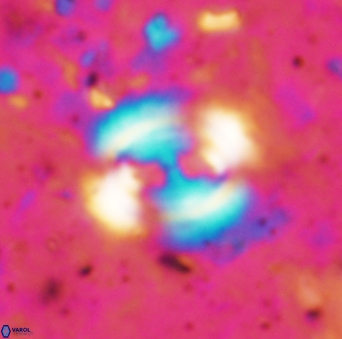
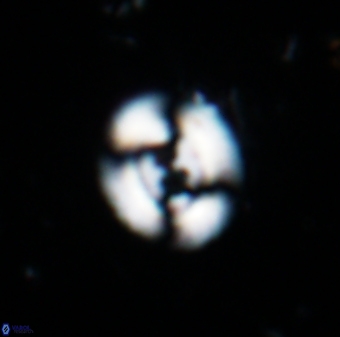
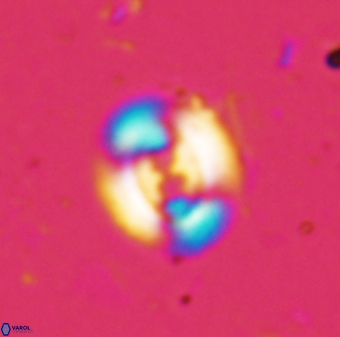
Watznaueria biporta Bukry, 1969
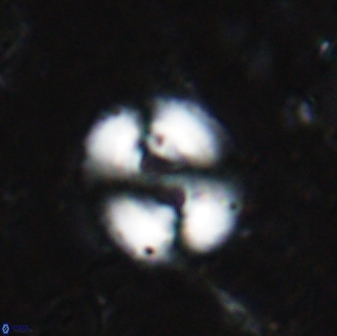
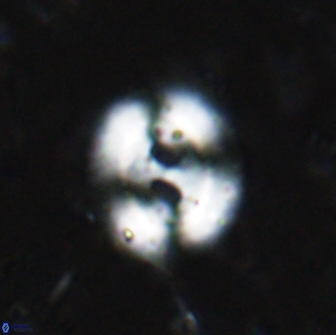
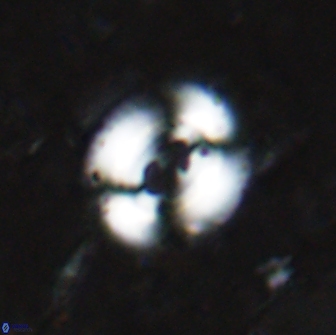
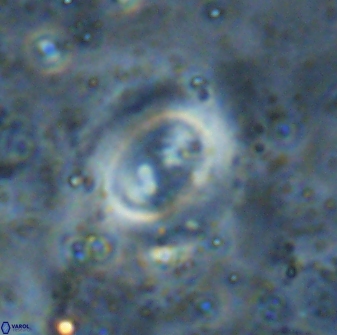
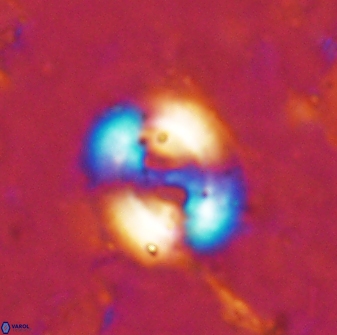
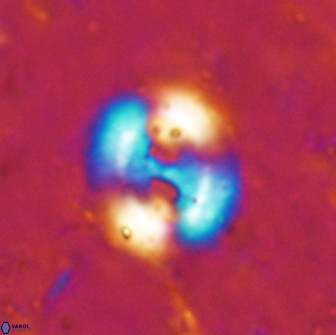
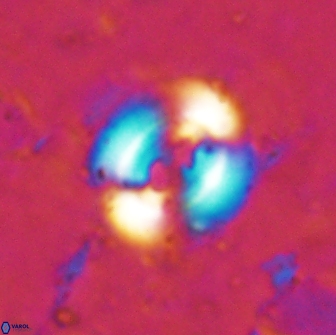
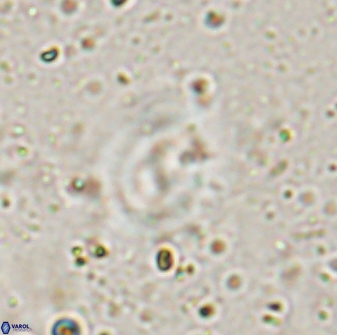
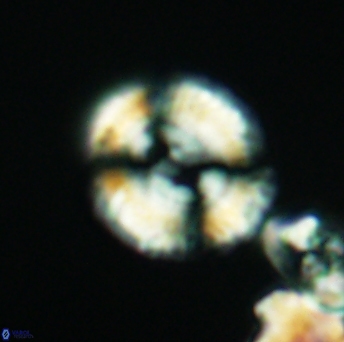
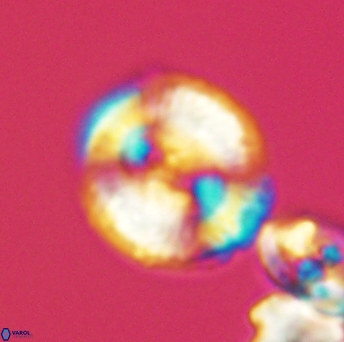
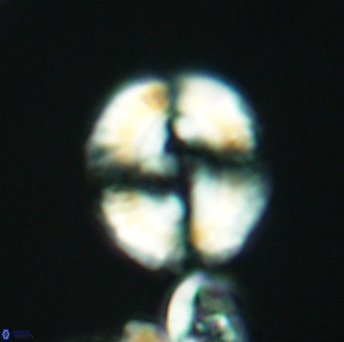
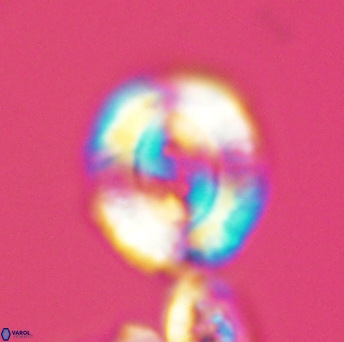
Large (>6.0 µm), subcircular to elliptical species of Watznaueria, characterised by a wide inner tube cycle bearing two pores aligned along the long axis of the placolith. The narrow outer tube cycle is readily observed under phase-contrast and bright-field illumination.
The shields display first-order yellowish-white interference colours, while the tube cycles exhibit white interference colours; all structures display inclined extinction lines and length-fast (–) elongation. In distal view, the extinction angles are approximately 80° in the shields and 72° in the tube cycles. Variation in the orientation of extinction lines between the tube cycles and the shield facilitates identification of the narrow outer tube cycle, in combination with observations under phase-contrast and bright-field illumination. The locking cycle exhibits interference colours, producing a transitional boundary between the tube cycle and shield.
Watznaueria biporta differs from Watznaueria cynthae primarily in pore arrangement: in Watznaueria biporta, the pores are aligned along the long axis of the placolith, whereas in Watznaueria cynthae they are diagonally aligned.
Bukry, D. 1969. Upper Cretaceous coccoliths from Texas and Europe. University of Kansas Paleontological Contributions, Articles 51 (Protista 2): 1-79.
Holotype
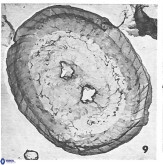
Watznaueria biporta
Bukry, 1969
Early Campanian
Lake Vaxahacie, Ellis County, Texas, USA