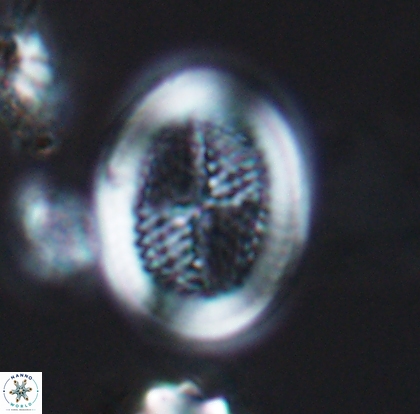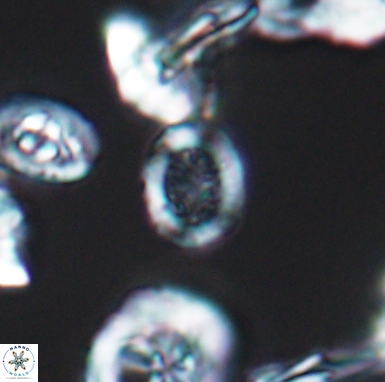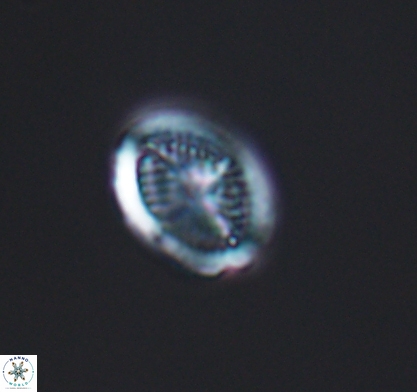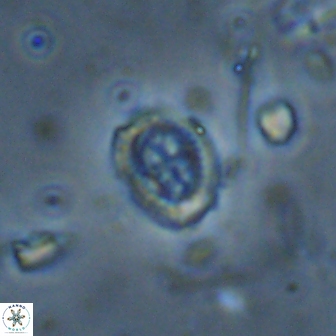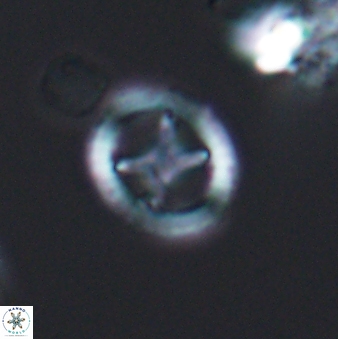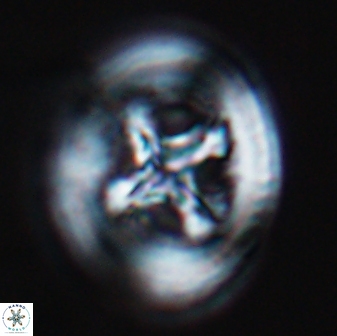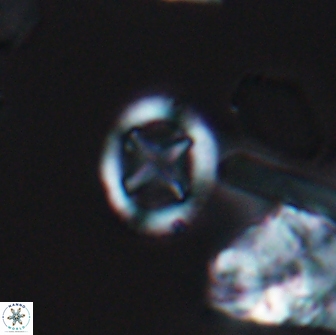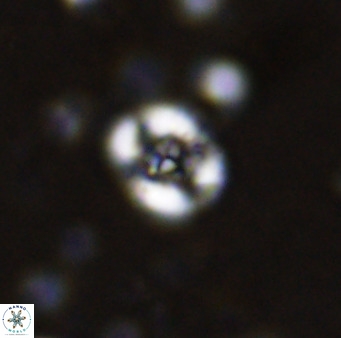
 1
1
 2
2
 3
3
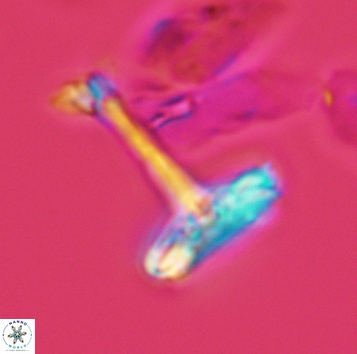 4
4
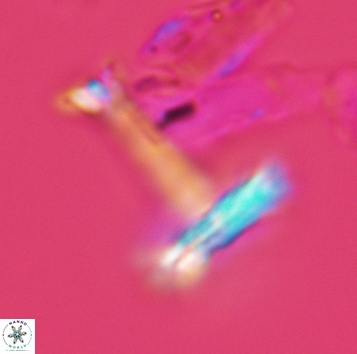 5
5
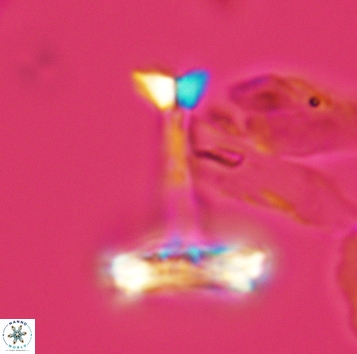 6
6
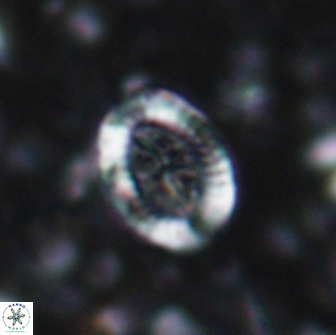
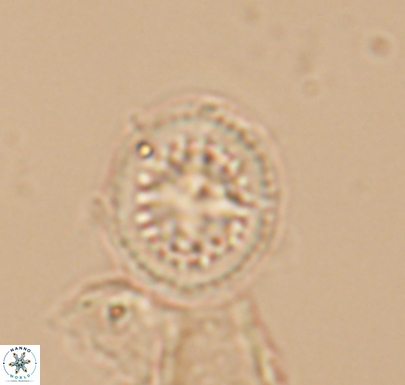
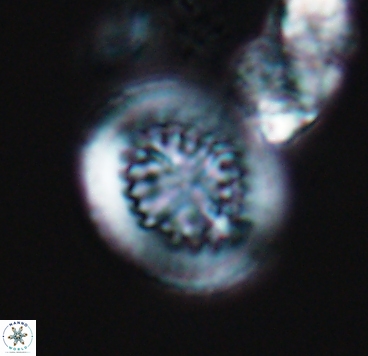
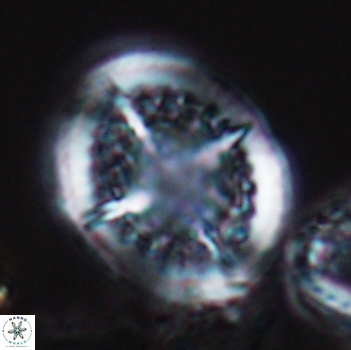
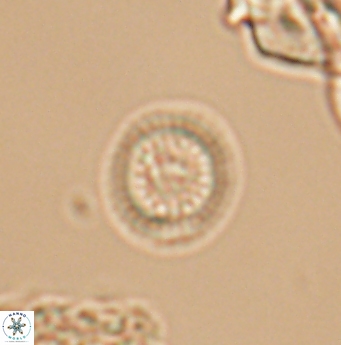
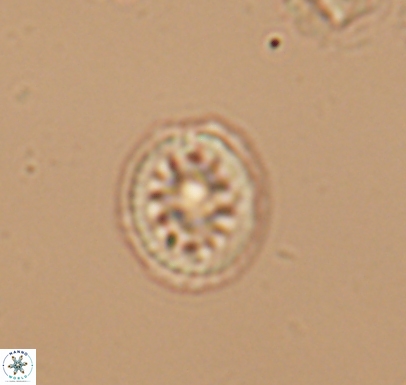
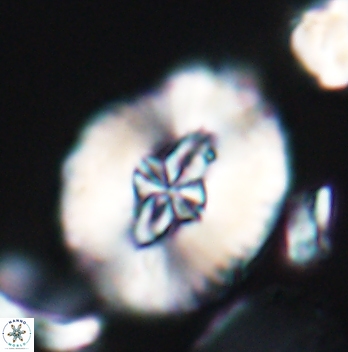
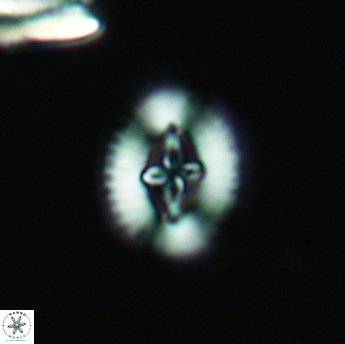
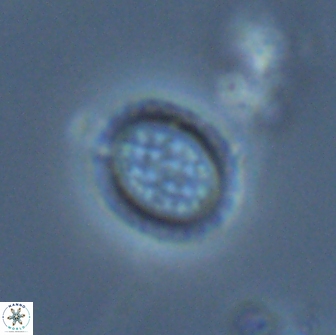
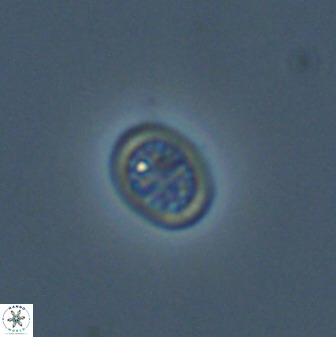
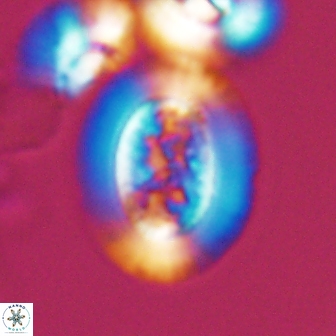
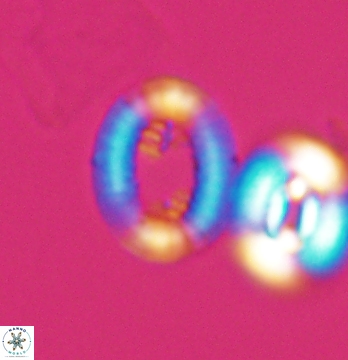
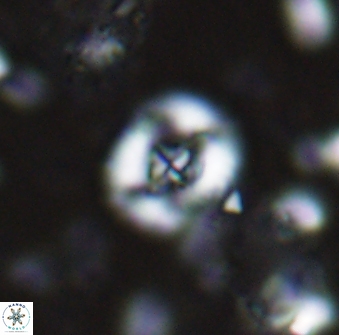
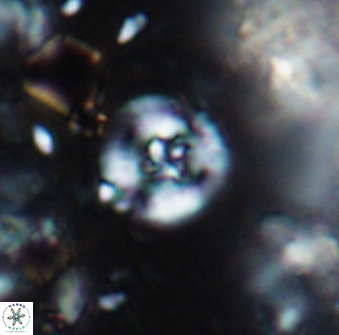
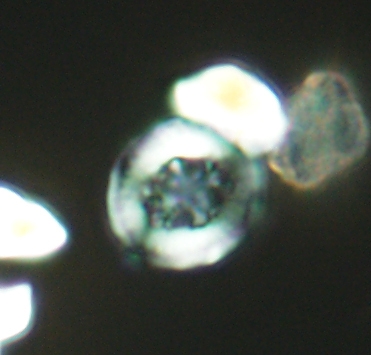
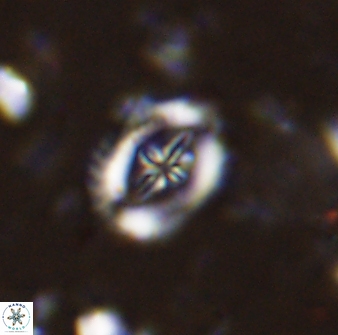
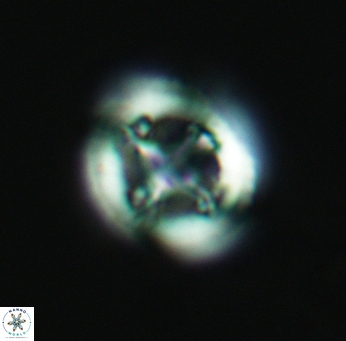
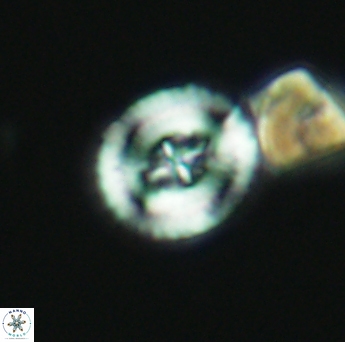
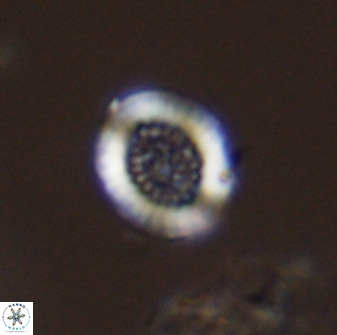
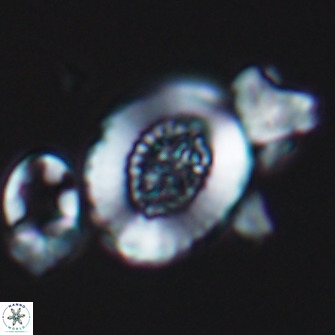
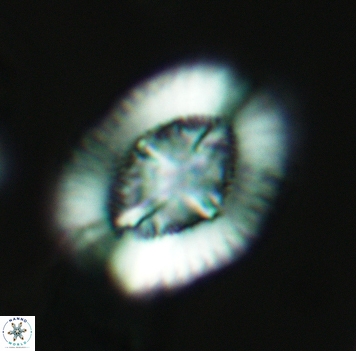
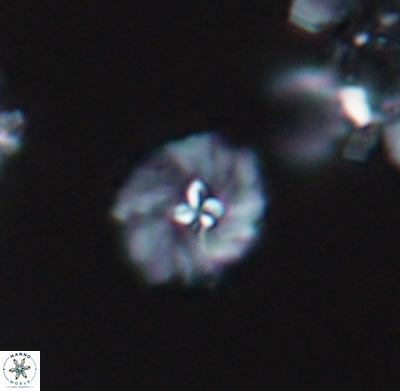
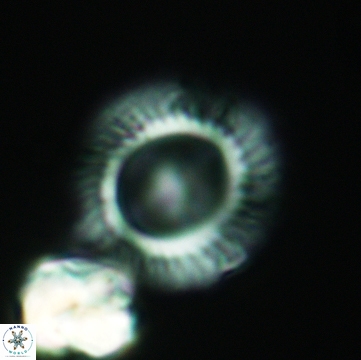
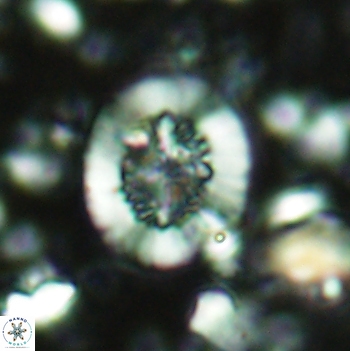
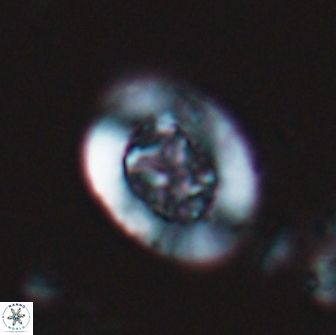
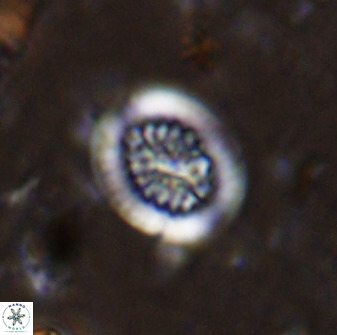
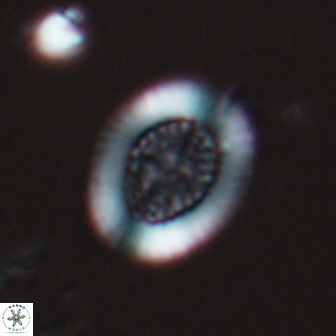
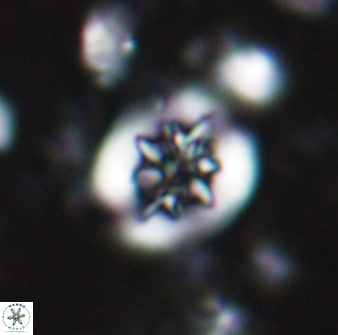
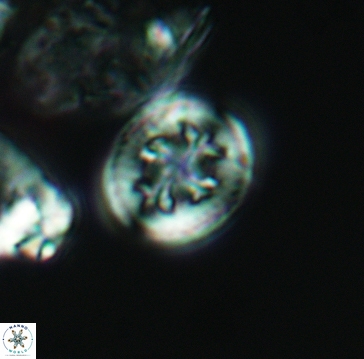
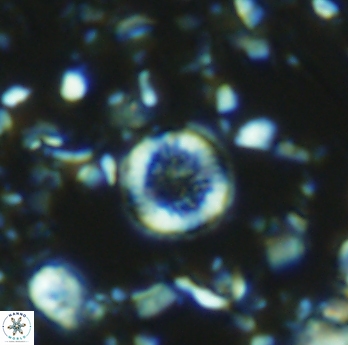
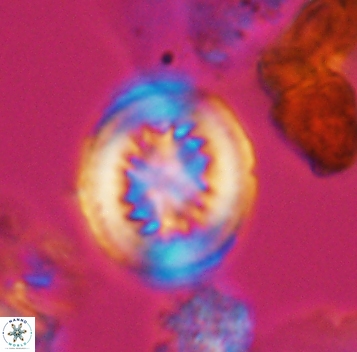
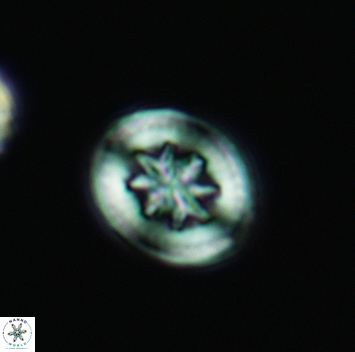
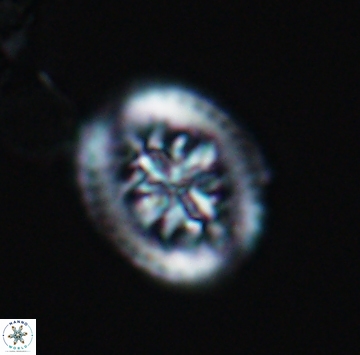
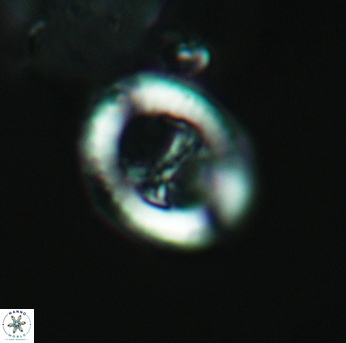
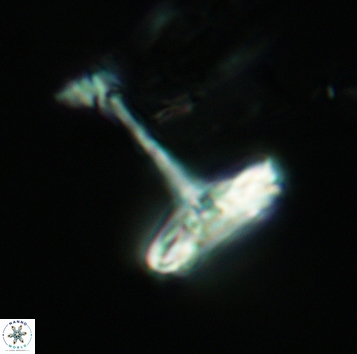
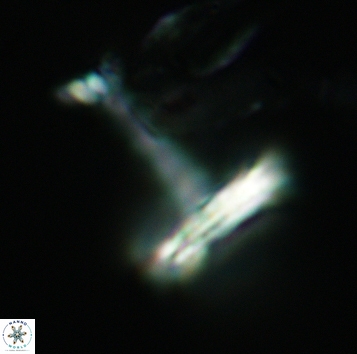
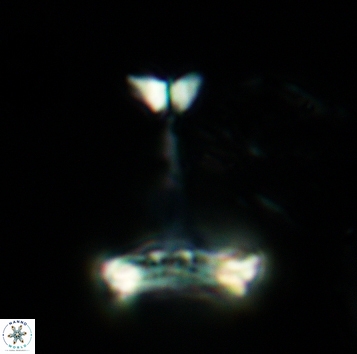
Cretarhabdaceae sp., Berriasian
Cretarhabdus Bramlette & Martini, 1964
Placoliths characterised by a cretarhabdid pelaga are assigned to this family.
Cretarhabdid pelaga is constructed by a double-layer distal shield, whose outer layer slopes towards the central area, formed of inclined segments that are typically weakly clockwise-imbricated, though rarely non-imbricate, and its inner layer is often exposed at the periphery and consists of non-imbricate segments. The proximal shield is often narrower and composed of radial segments that may be inclined.
The optical properties of cretarhabdid pelaga include that the outer distal shield exhibits greyish-white interference colours, which is the direct result of sloping (inclination) and its thickness (it is observed through the thinnest surface of segments). The inner layer of the distal shield dimer exhibits constant extinction if exposed. The proximal shield is assumed to show constant extinction, but needs to be confirmed.
Because the pelaga are similarly constructed for the taxa included in Cretarhabdaceae, the generic and species assignments are based on the often arched central area characteristics. The assignment of the Pickelhaube to Cretarhabdaceae is questionable.
Taxa with axial cross
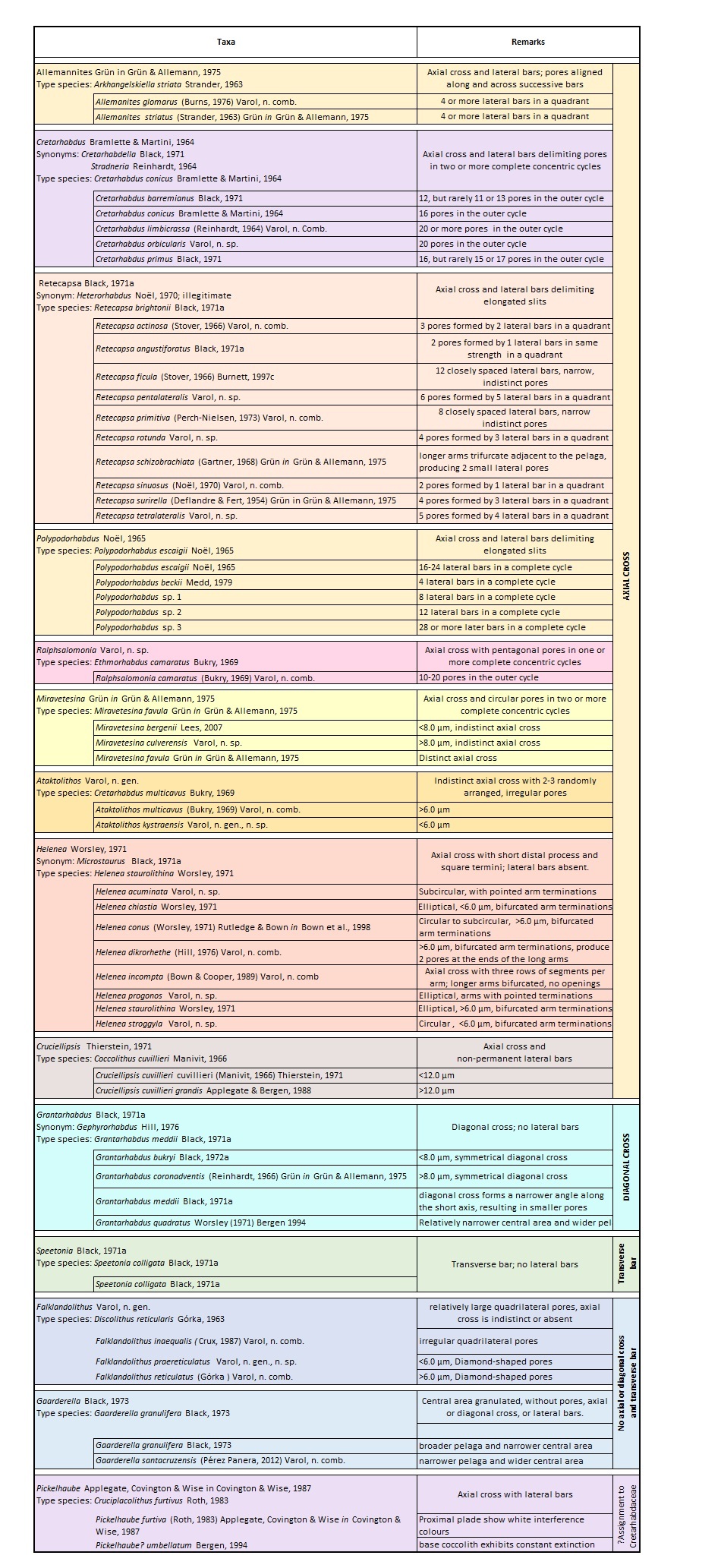
Allemannites – Intercross area bearing lateral bars that delimit pores aligned along and across successive bars.
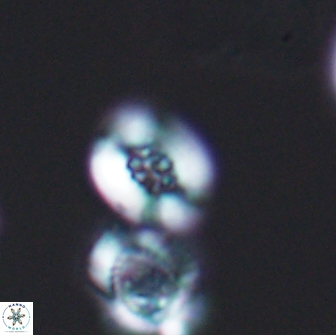
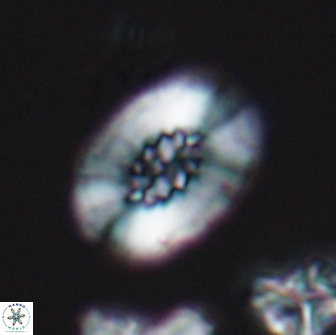
Cretarhabdus – Intercross area occupied by lateral bars delimiting pores arranged in two or more complete concentric cycles.
Retecapsa – Intercross area filled by lateral bars delimiting pores arranged in a single complete concentric cycle.
Polypodorhabdus – Intercross area with long, slender lateral bars delimiting openings in elongated slits.
Ralphsalomonia – Intercross area with pentagonal pores arranged in one or more complete concentric cycles.
Miravetesina – Circular pores present in the intercross area, arranged in two or more complete concentric cycles.
Ataktolithos – Intercross area occupied by irregular, randomly arranged pores.
Helenea – No structure present in the intercross area.
Cruciellipsis – Non-permanent lateral bars may be present in the intercross area.
Taxa With Diagonal Cross
Grantarhabdus – No structure present in the intercross area.
Taxa with transverse bar
Speetonia – No structure present in the intercross area.
Taxa without axial or diagonal cross and transverse bar
Falklandolithus – Central area with quadrilateral pores arranged irregularly or in a discernible pattern.
Gaarderella – Central area granulated.
Bramlette, M. N. & Sullivan, F. R. 1961. Coccolithophorids and related nannoplankton of the Early Tertiary in California. Micropaleontology 7(2): 129-188.
Thierstein, H. R., 1973. Lower cretaceous calcareous nannoplankton biostratigraphy. Abhandlungen der Geologischen Bundesanstalt. 29, 3-52.